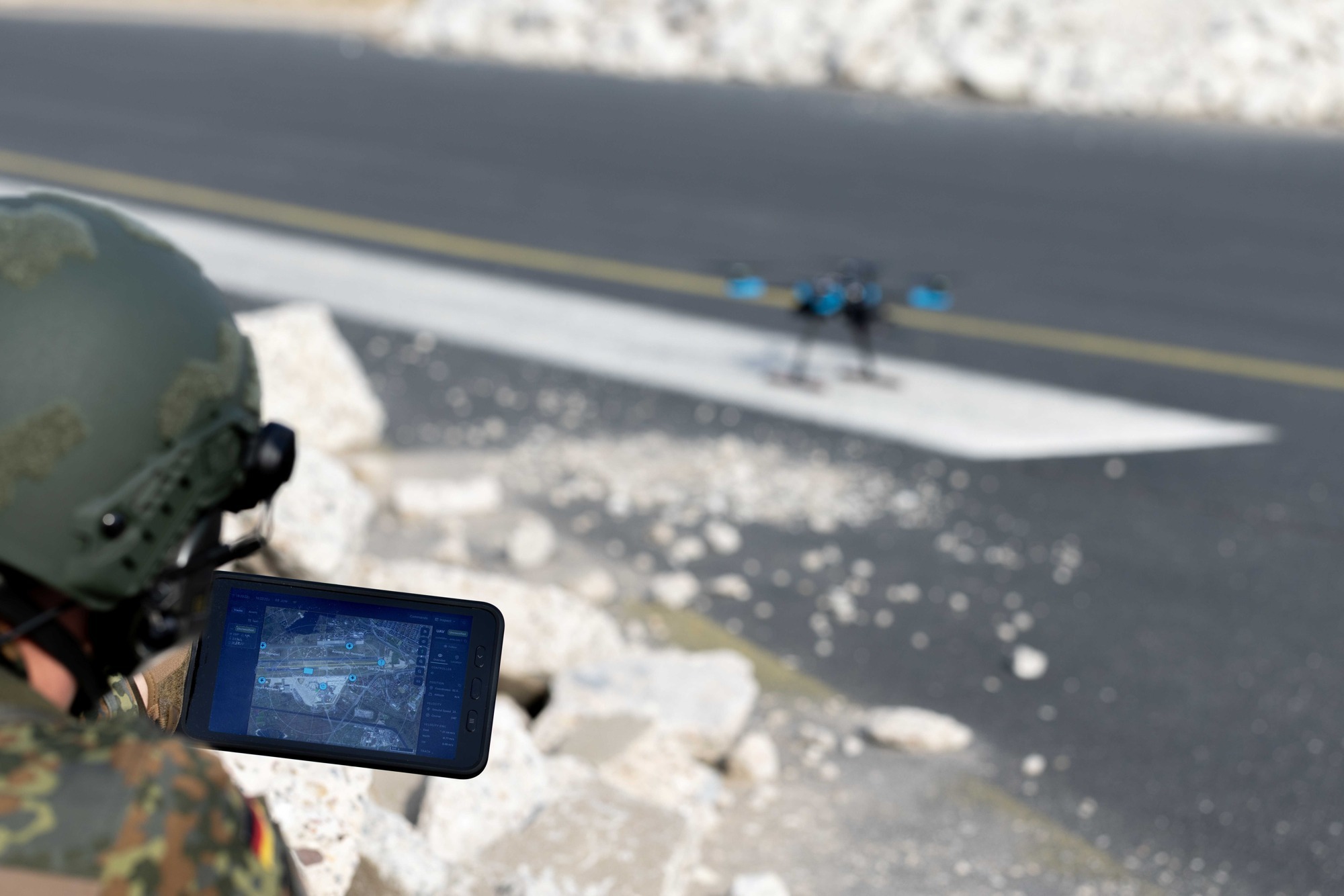
Project Q and Auterion have moved their partnership from an August memorandum to a specific software connection. On October 19 they reported a connector between HYDRIS and Auterion Mission Control, exchanging sensor detections, drone positions and tasking information in both directions. Project Q Auterion integration announcement.
The mechanism matters because a multi-vendor operating picture needs more than matching icons on a screen. Systems must agree on the meaning, age and authority of exchanged information. The release identifies a completed integration milestone, but does not disclose an accepted military deployment or measured performance under degraded communications.
An open interface still needs operating rules
The partners emphasise open architectures and customer choice. Our assessment is that a connector can reduce one integration barrier without eliminating the need to manage versions, identity and command authority. Receiving a tasking message is different from being permitted to act on it.
A customer also needs to know what happens when data are stale or the two systems disagree. Those behaviours determine whether information exchange remains dependable beyond a controlled demonstration.
Follow deployment and maintainability
If the connector can be maintained across software releases and integrated with additional systems, it could give operators more room to change suppliers. The next evidence should identify acceptance conditions, supported versions and failure handling. Those would connect the claimed interoperability to an option customers can sustain.
Image: Hannes Grobe / CC BY-SA 4.0. Reuse terms. Original retained; responsive display may crop the frame.
Sources & evidence
Sources describe the announcements and evidence available when this analysis was published. Company claims are attributed; plans and trials are not treated as sustained operation.