At TSMC’s September 2026 Open Innovation Platform conference, SK hynix displayed an NVIDIA Vera Rubin system alongside its memory products. The company’s account emphasized HBM, server memory and storage as connected parts of AI infrastructure. The display captures why memory has become strategically important: an advanced processor depends on a wider set of specialized components and manufacturing relationships. SK hynix September 2026 TSMC conference account
Capability depends on complementary parts
Our analysis treats an AI system as a collection of interdependent capabilities. Processors, memory, networking and software must work together. Restricting one part can affect the usefulness or availability of the others, although the extent depends on the workload, available alternatives and the ability to redesign the system.
This does not mean any individual component is an absolute bottleneck forever. Firms can substitute, optimize and invest in alternatives. The relevant question is how much time, cost or capability a constraint imposes. Strategic analysis should distinguish a temporary inconvenience from an enduring limit rather than assume either outcome.
Follow adaptation as well as restriction
For autonomy, different uses may respond differently. Training a large model and running a compact model onboard a machine place different demands on infrastructure. A policy affecting one layer may influence the economics of another without stopping all development. Broad claims of total success or total failure miss those distinctions.
The useful evidence includes supplier qualification, production capacity and measured performance of substitutes. Policy announcements establish intent and legal scope at a particular date; they do not independently establish technological results. Memory belongs in geopolitical reporting because it connects manufacturing specialization with the practical cost of building and operating AI, not because one regulation settles the contest.
The supply chain crosses corporate boundaries
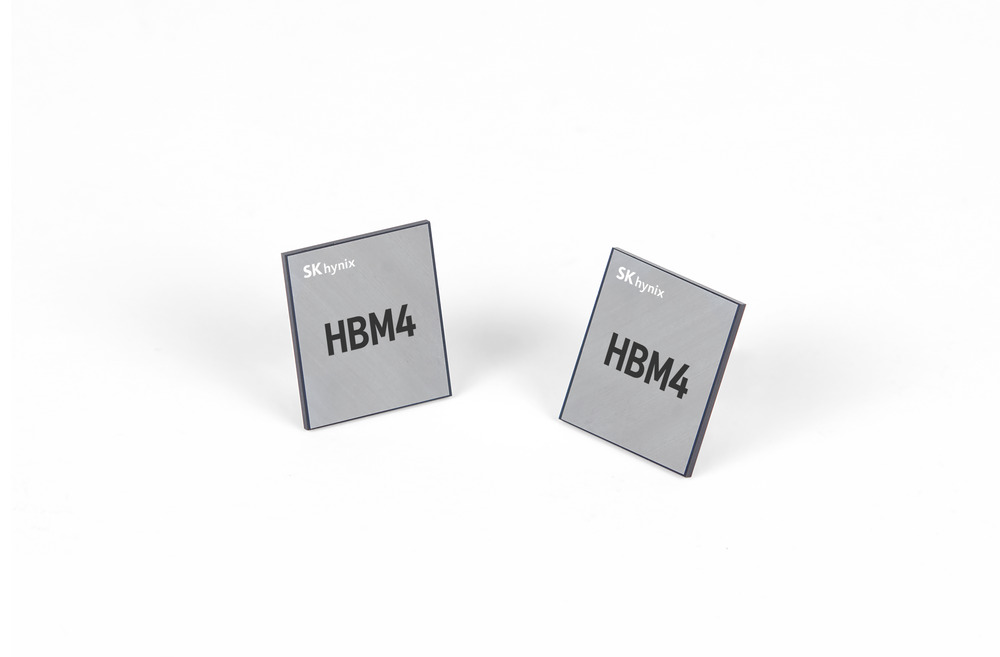
SK hynix and TSMC announced their HBM4 collaboration in April 2024. The plan included using TSMC’s advanced logic process for the memory base die and improving integration through CoWoS packaging. That is a relationship between memory design, foundry processes and packaging, rather than a single factory producing an isolated interchangeable part. SK hynix–TSMC April 2024 HBM agreement
This matters geopolitically because a bottleneck can migrate. Increasing the number of accelerator chips does not guarantee a matching supply of packaged systems. If memory, substrates or integration capacity lag, completed computing capacity may arrive later than the processor shipment figures suggest. National capability is therefore better measured at the usable-system level than at one component.
Readiness is a sequence, not a slogan
In September 2025, SK hynix said it had completed HBM4 development and prepared for mass production. A year later, its conference account showed the technology within a broader product portfolio. Neither statement alone supplies an independently audited count of shipped systems or the full yield of a production line. They document stages of technology and commercial presentation. SK hynix September 2025 HBM4 readiness SK hynix September 2026 TSMC conference account
The distinction is familiar from autonomy itself. A working prototype, production readiness and reliable volume supply are different achievements. They are linked, but progress at one stage cannot be treated as automatic completion of the next. This is why a product launch can be strategically meaningful without resolving every supply constraint.
Controls reached beyond the accelerator
The December 2024 BIS package explicitly included controls affecting high-bandwidth memory as part of a wider effort to restrict advanced semiconductor capabilities available to China. The inclusion of memory made clear that policy was addressing the system around AI processing, not only the best-known accelerator brands. BIS December 2024 semiconductor controls
Our analysis is that this reflects the complementary nature of the technology. Restricting one essential input can affect the usefulness of another. But the actual effect depends on inventories, alternative designs, enforcement and domestic development. The rule’s existence does not provide a measured estimate of how much a particular model-training program has been delayed.
Autonomous services need data movement
Micron’s HBM4 materials emphasize bandwidth and power efficiency for demanding AI systems. Such specifications matter because model execution repeatedly moves parameters and intermediate data through memory. A system can have substantial arithmetic capability while waiting for the information needed to use it. Micron HBM4 overview
For an autonomy developer, the practical metric is completed useful work. Training a policy, running simulation batches and serving an agent create different memory patterns. A faster component only helps to the extent that it relieves the actual bottleneck. That makes workload-specific testing more informative than assuming one advertised bandwidth improvement translates directly into the same percentage gain for every application.
The strategic lesson is interdependence
The SK hynix–TSMC relationship illustrates a wider point: industrial leadership often rests on collaboration among specialized firms. This can accelerate innovation and simultaneously create concentrated dependencies. Governments seeking resilience must decide which relationships to secure, which capacity to duplicate and which substitutions are technically realistic.
The September conference is evidence of an active industrial ecosystem, not a ranking of national autonomy. To assess strategic progress, follow qualified products, integrated systems and sustained supply alongside announcements. Memory has become part of the contest because it helps determine whether advanced AI compute is actually usable, affordable and available when a developer needs it.
Sources & evidence
This archive preserves its original editorial date. Sources describe the events and announcements discussed; they do not establish today’s status.