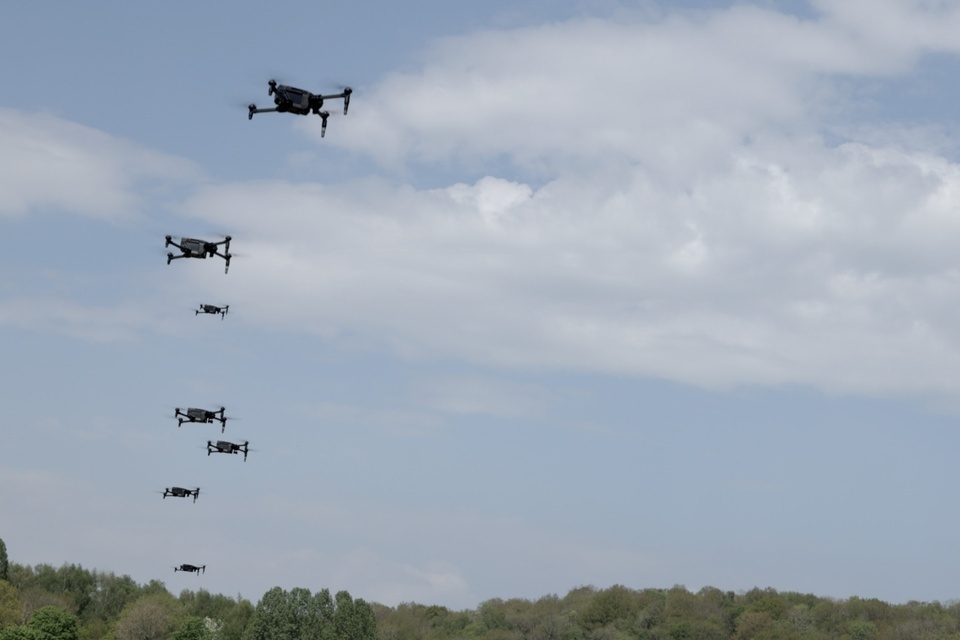
On August 25, 2026, the UN Secretary-General and ICRC President renewed their call for legally binding restrictions on autonomous weapons. They pointed to the November review conference of the Convention on Certain Conventional Weapons as an opportunity to begin negotiations. The appeal arrived as military autonomy programs were demonstrating more capable machines, making the meaning of human control an immediate design and policy question. UN–ICRC August 2026 autonomous-weapons appeal
Make control observable
Our analysis moves from the slogan to the workflow. Which person understands the system’s assigned task? What information reaches that person before a consequential action? Can the task be limited, suspended or changed? A human appearing somewhere in a diagram does not answer those operational questions.
The quality of control also depends on time and workload. An operator overseeing many systems may receive more information than can be meaningfully assessed. Interfaces and procedures should be evaluated under realistic conditions, including uncertainty and disagreement, rather than only when the system behaves as expected in a prepared demonstration.
Responsibility continues after action
Reviewability matters because organizations need to reconstruct what happened and improve their practices. Records of configuration, authorization and system behavior can support that process. The issue is broader than technical logging: institutions need people with the authority and expertise to interpret evidence and act on what they learn.
Autonomy can redistribute decisions without removing responsibility. The policy challenge is to specify acceptable bounds and verify how they work in practice. This analysis does not infer legal compliance from a vendor claim or prescribe a universal control arrangement. It argues that public debate becomes more useful when human control is discussed through concrete responsibilities and demonstrable system behavior.
A flight test shows one kind of control
DARPA’s July 2026 account of VENOM described modified F-16s testing AI flight control with a pilot able to switch between human and AI operation. The aircraft are experimental platforms with people in the cockpit monitoring the agents. This is concrete human oversight in a test setting, not evidence that the system has been authorized to select and attack targets without intervention. DARPA July 2026 VENOM flight tests
The distinction is essential. Flying an aircraft, interpreting sensor information and deciding to use force are different functions. Automating one does not automatically automate the others. A meaningful description of control must identify which function is delegated, under what conditions, and what the human can actually do when the system behaves unexpectedly.
The research program separates levels of judgment
DARPA’s Air Combat Evolution program describes a hierarchical approach in which humans may retain higher-level decisions while autonomy handles maneuvering and tactics. That is a research concept for human-machine collaboration, not a universal settlement of the legal or ethical debate. It nevertheless shows why a binary label such as autonomous or human-controlled can hide important distinctions. DARPA Air Combat Evolution program
An operator can exercise significant authority before a mission begins, during execution or both. The quality of that authority depends on information, time and technical means. A nominal override is weak if the person cannot recognize a problem or intervene soon enough. Equally, a tightly bounded task may allow meaningful prior control without requiring continuous manual steering.
The humanitarian proposal is more restrictive
The ICRC’s position calls for prohibitions on unpredictable autonomous weapons and those designed or used to apply force against people, with restrictions on other systems. Its joint 2026 appeal seeks new rules; it should not be misreported as a treaty already adopted by states. The distinction between an institutional recommendation and binding law is part of accurate coverage. ICRC May 2025 human control statement UN–ICRC August 2026 autonomous-weapons appeal
A 2020 ICRC–SIPRI study organizes practical control around weapon parameters, the environment of use and human supervision. The value of that framework is its specificity. It turns an abstract demand for human control into questions about targets, geography, duration and intervention. It does not remove the need for political agreement about which systems should be prohibited. ICRC–SIPRI practical human-control study
National policy also depends on context
The UK’s 2022 policy document says appropriate human involvement can include real-time supervision or the setting of operational parameters. It also requires legal review and clear responsibility. That published approach differs in emphasis from a simple demand that a person approve every machine action, and it does not certify any particular future system as lawful. UK defence approach to AI-enabled capability
Our assessment is that the policy debate becomes clearer when these positions are compared at the level of actual decisions. Who defines the permitted task? How narrow are the environmental assumptions? What information supports an intervention? A broad claim of human oversight is insufficient if those details remain undefined.
What responsible capability reporting should show
The next useful disclosures from autonomy programs would explain the human role alongside the machine’s performance: which decisions were automated, which restrictions were enforced and how the test team handled failures. That information is compatible with reporting technical progress and essential to understanding its limits.
The summer 2026 record contains both experimental advances and renewed calls for legal restraint. Neither makes the other irrelevant. Human control is not an ornamental phrase added after a machine is built. It is a combination of authority, system design and operating conditions that determines what the demonstrated capability actually means.
Sources & evidence
This archive preserves its original editorial date. Sources describe the events and announcements discussed; they do not establish today’s status.